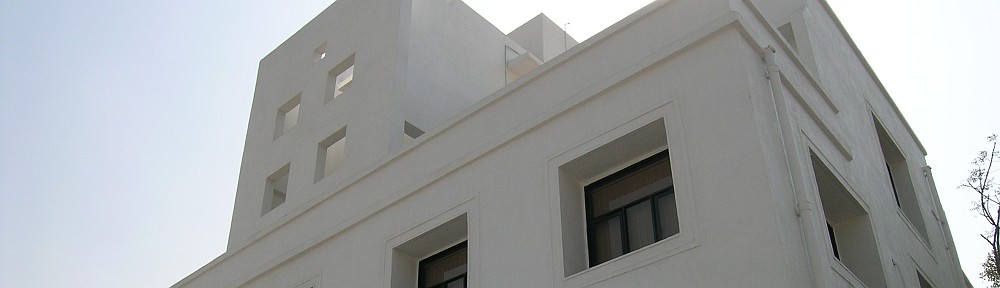
Glaring mistakes ~ another reason to reject glass façades

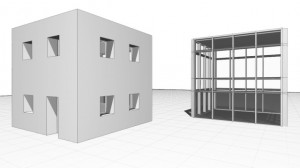
conventional v/s curtain wall

In hot climates, the overall energy usage rises as you increase the glazed area. Curtain walls, therefore, are highly inappropriate.

I have ranted about glass façades for a long time and this editorial by Sunita Narain of DTE has inspired me to add a couple of paragraphs to the original one.  Among other things, she has written about a recent study by IIT-Delhi which found that, in our hot climate, the manufacturers’ claims of special coated glass or double/triple glazing being able to reduce heat gain are rather hollow.

One of the other specious arguments put forth in an attempt to portray glass curtain walls as green systems is to say that it reduces the electricity consumed for lighting. This is a half-truth. Leave aside the uncomfortable glare that people working inside such buildings have to put up with, let us make s simple comparison.

Consider a 10m² conventionally designed space. Assuming that we don’t take passive cooling techniques into account, the air-conditioning load will be in the region of 3,500W (1 ton).  Lighting the same space, on the other hand, will need just 50W with fluorescents or 40W if we’re using LED fittings.

Now, imagine a similar sized curtain-walled space. The maximum saving that can be achieved by reducing lighting is a puny 50W. However–and this is the big problem–air-conditioning requirements will probably have risen to a whopping 5,000W.  Even with all the specially coated and multi-layered of glass in the world, the total requirement is unlikely to be anything less than 4,500W.

So yes, we may not use as much electricity for lighting but, I’m afraid, the energy usage for cooling will go right through the roof and no amount of marketing spin can get around this simple fact.

Building walls with the rat trap bond ~ they're really cool

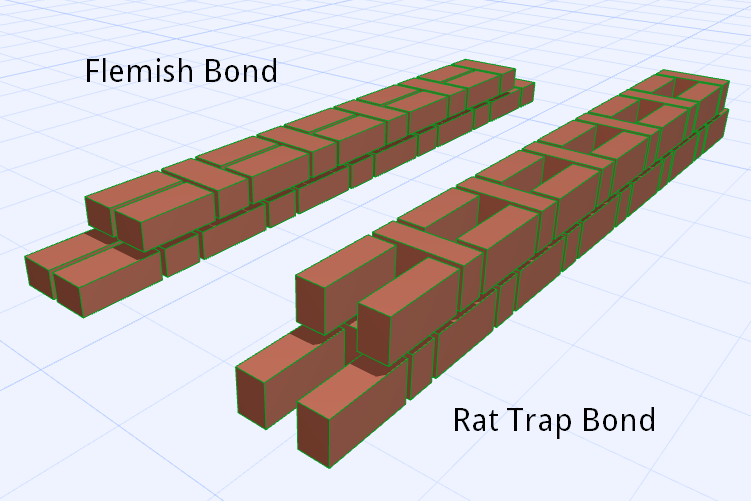
Just in case I’ve got you visualising rodents scurrying about where they’re not wanted, ease your mind; the rat trap bond I’m talking about is simply a method of laying bricks when building a wall.  It’s similar to the common “Flemish” bond but instead of putting the bricks on their face, they are placed on their edges. This leads to cost savings because less bricks and cement are needed which, in turn, reduces the embodied energy of the wall.

The Rat Trap Bond

Bricks are laid on edge to create an air gap between two layers

Laurie Baker took every opportunity to try and make people realise the value of this method but, by and large, the 20-25% saving in brick doesn’t seem to have been appealing enough.  The rat trap method of construction was popular in England until the start of the 20th century but sustained lobbying by the brick-making industry convinced people that that it was not strong enough to build load-bearing walls.

That is rubbish of course; it’s strong enough for one and two storey buildings as has been proven over and over again by Laurie Baker’s lasting work. But masons too are not usually happy about adopting this system and come up with all sorts of excuses to try and avoid it. I have to admit that, till date, I have not pushed hard enough against their inertia but now I’ve just got one more reason to do so.

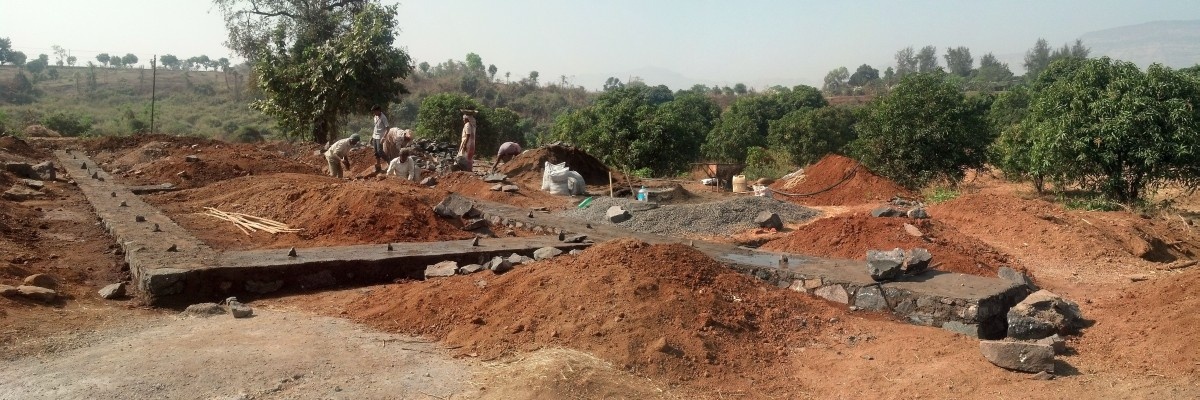
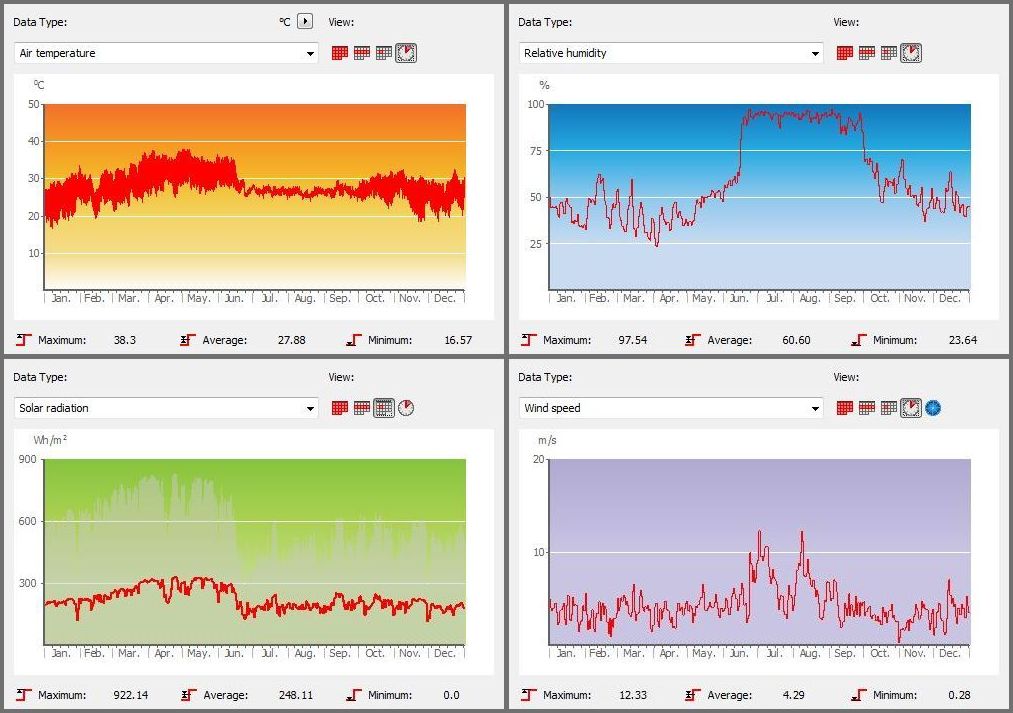
For the ShKo bungalow at Karjat, I plan to use the rat trap walls and wanted to know just how much difference they would make thermally. Nobody seems to have done a calculation of the difference — at least there was none that I could find. So, armed with some data from thermal calc and the energy evaluation component of ArchiCAD, I tried to do just that.

Taking just a simple 3m x 3m structure with no openings, I ran a calculation for both types of wall. Result: average U-value of the structure’s outer shell dropped about 15% compared to conventional walls and the energy required for cooling also fell by about 8%. The difference was exaggerated because the model had good roof overhangs to shade the walls.

Still, when you think about it, 8% is nothing to scoff at.  In addition, the embodied energy is reduced quite dramatically and, of course, Laurie Baker’s original reason for using the rat-trap bond still stands — the wall is simply cheaper to build.

Now, I just have to go and steam-roll the masons into learning a new technique.

ShKo Bungalow at Karjat ~ design completed

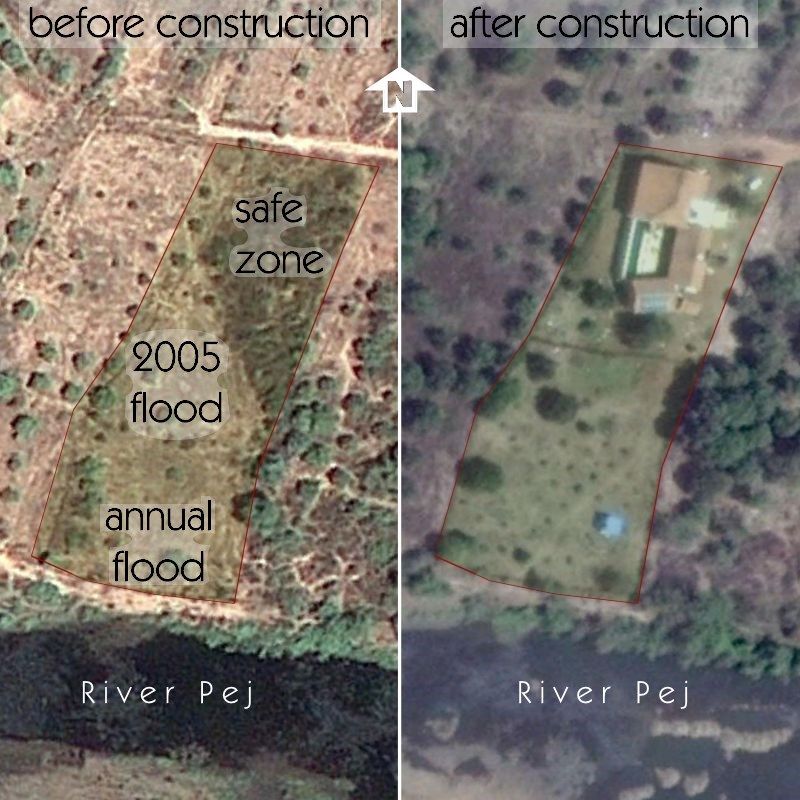
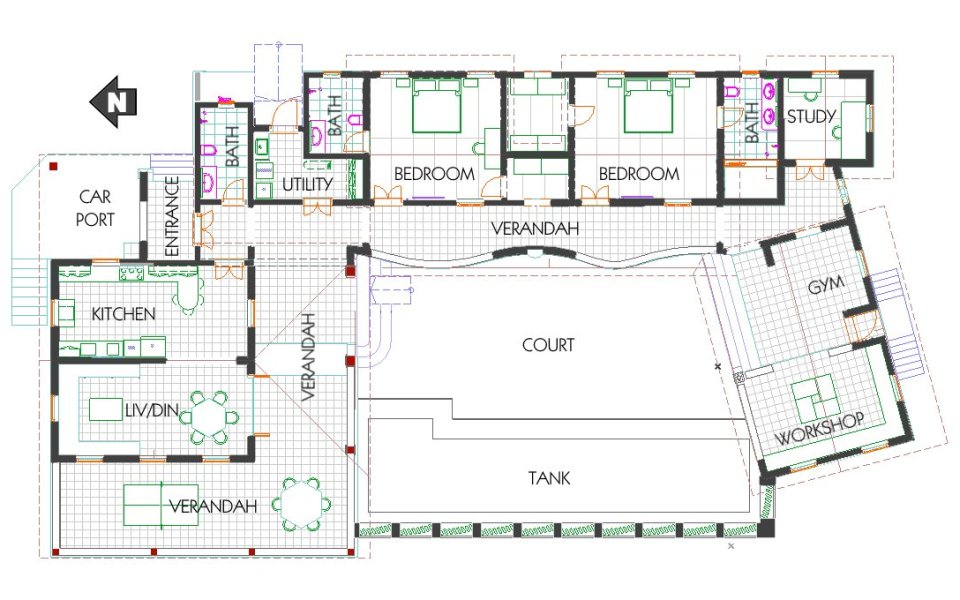
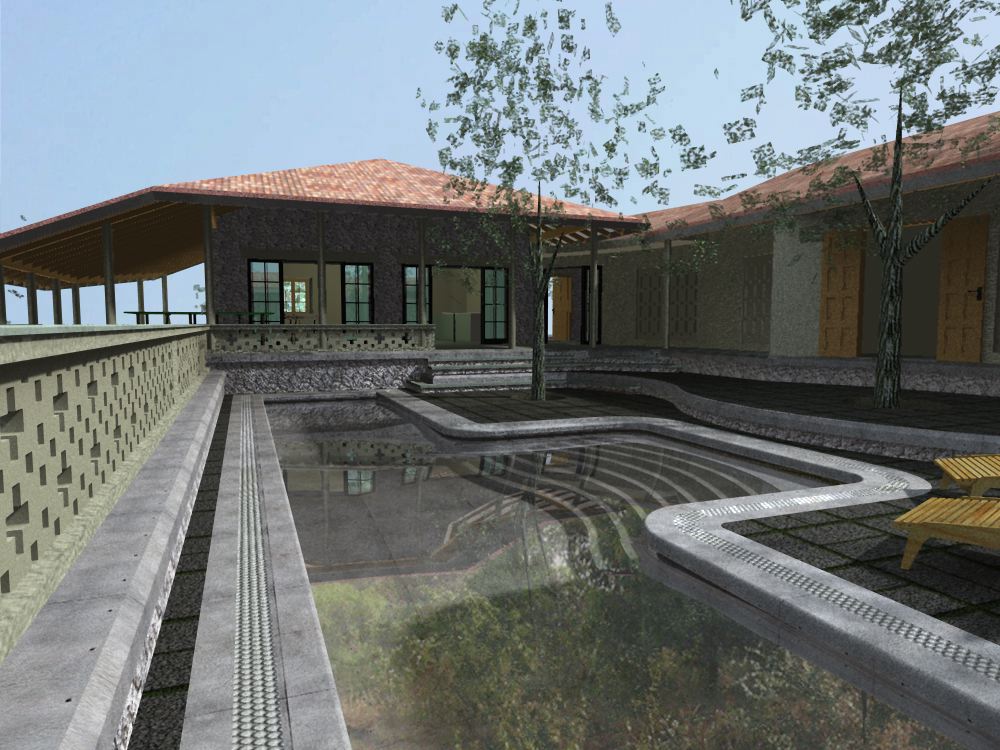
The design for the ShKo bungalow at Karjat has finally been completed. It’s taken a lot longer than most because, apart from the complex slope, there was a severe constraint of building within a small portion of the entire one acre plot — the rest is prone to occasional flooding from the adjoining river.

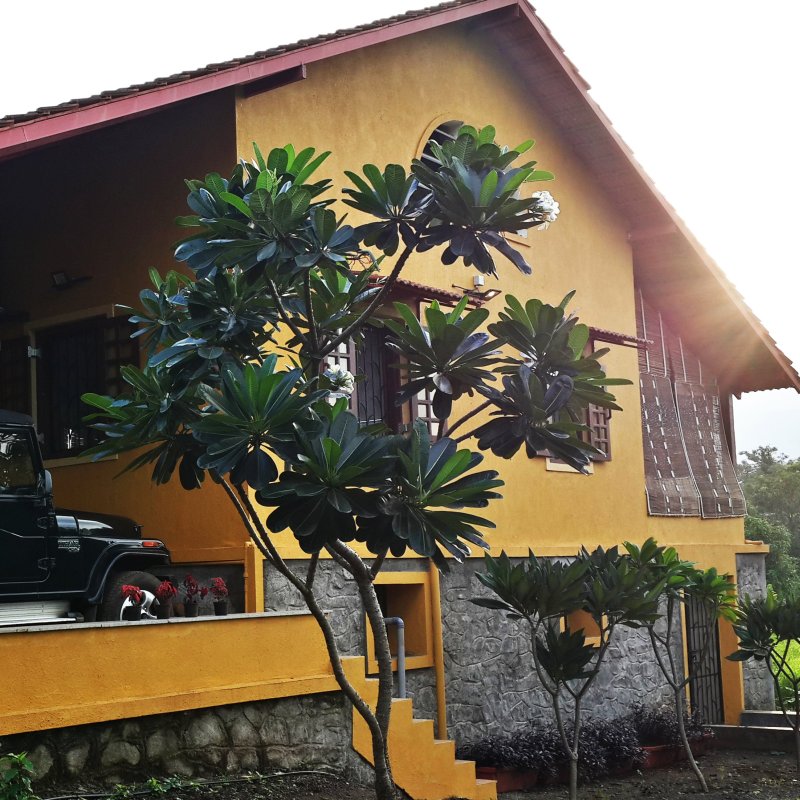
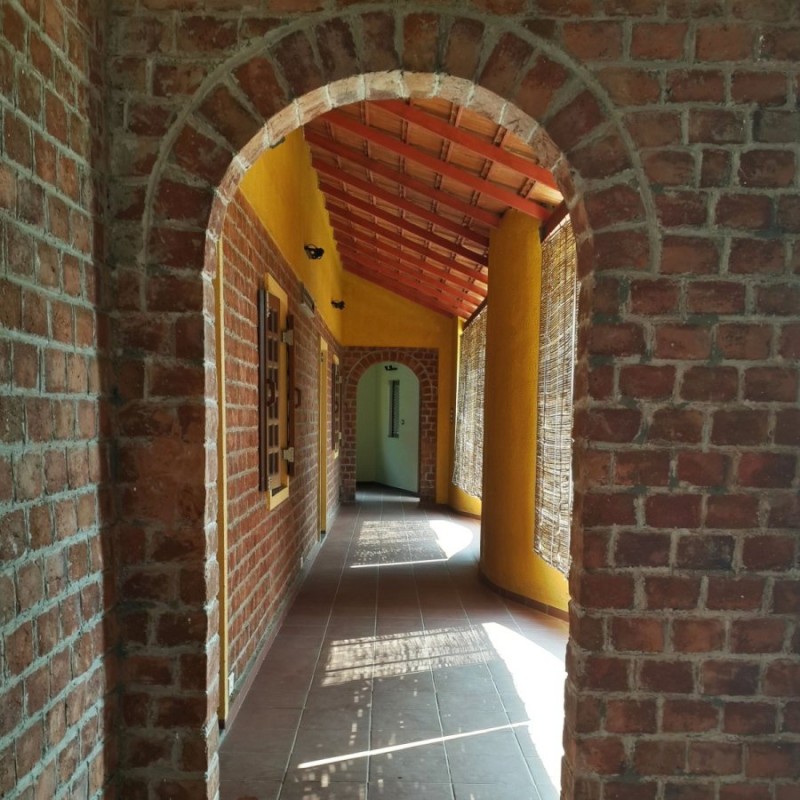
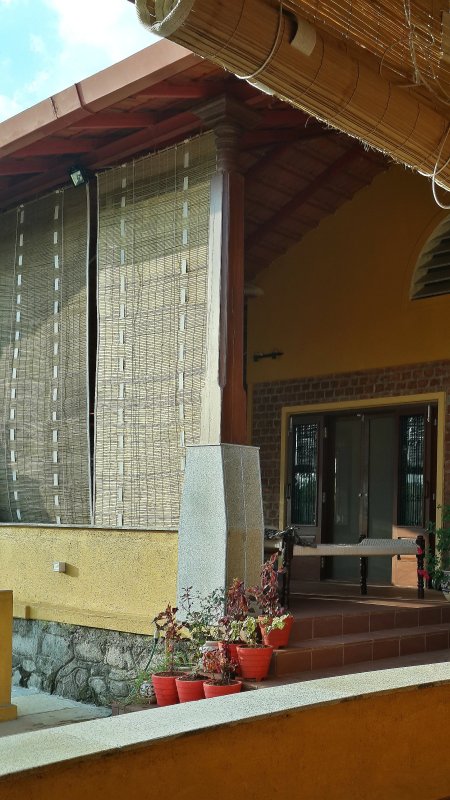
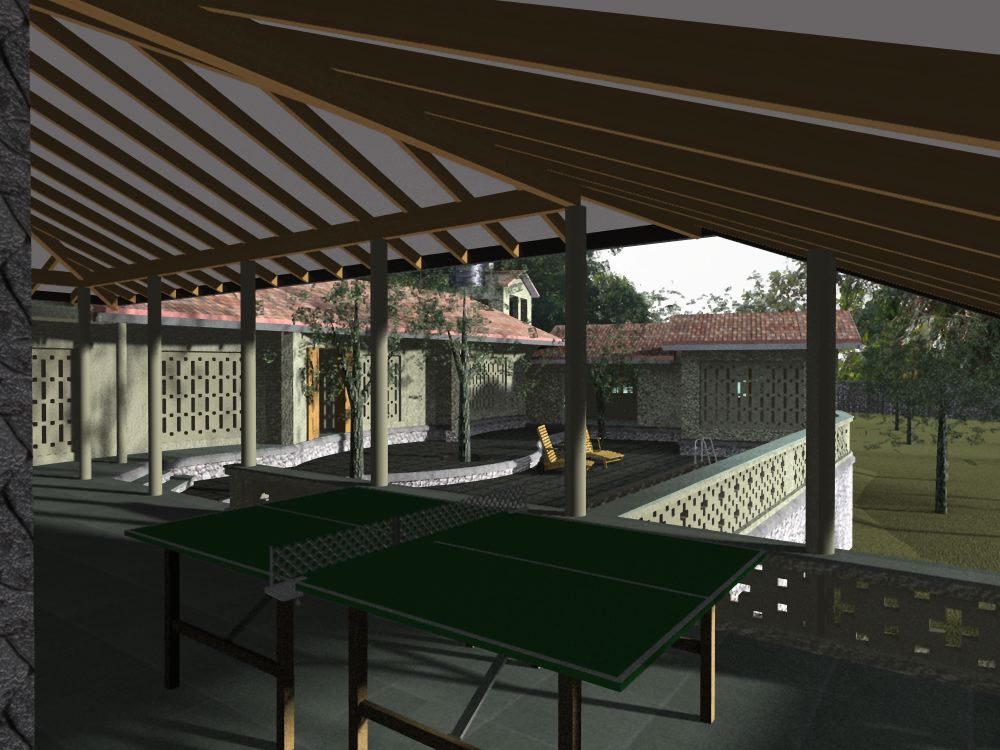
Like other architectural designs, this too makes maximum use of local materials and of passive cooling.  External stone walls are at least 24″ (60cm) thick and provide a formidable barrier to heat-gain even in a place like Karjat.  Deep verandahs on the South and West don’t allow direct egress of strong sunlight from mid-mornings till evening. And high roofs with openings at upper levels allow constant ventilation to take place.

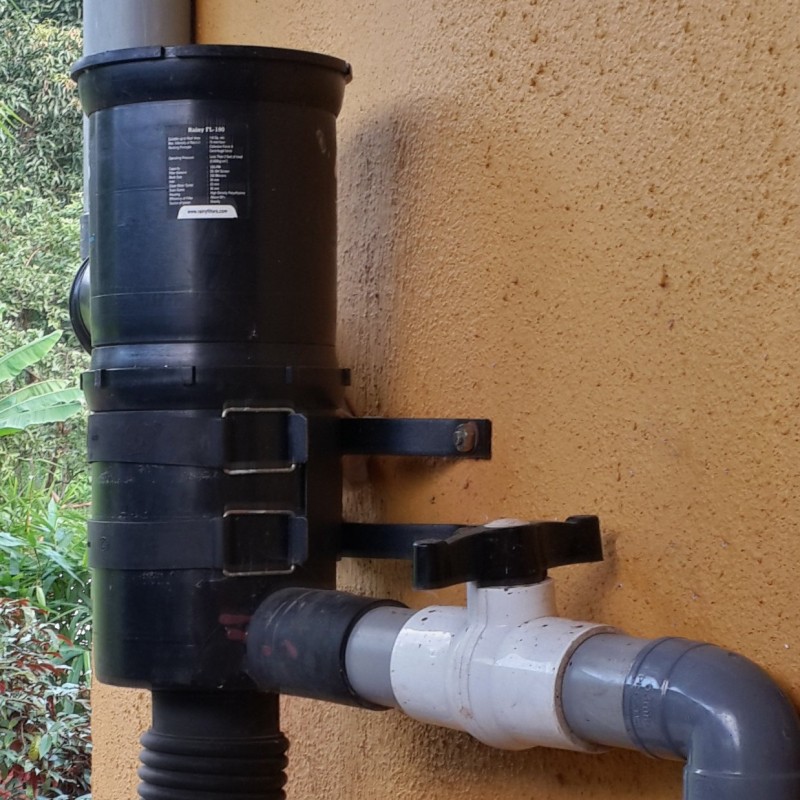
Rainwater harvested from the roof will be collected in the basement that is automatically formed by the sloping land. It will also be used to flood the pool which will not, hopefully, have any chemicals used to disinfect it. The current plan is to do natural filtration but the eventual system will depend on getting a reliable and qualified consultant to carry this out.

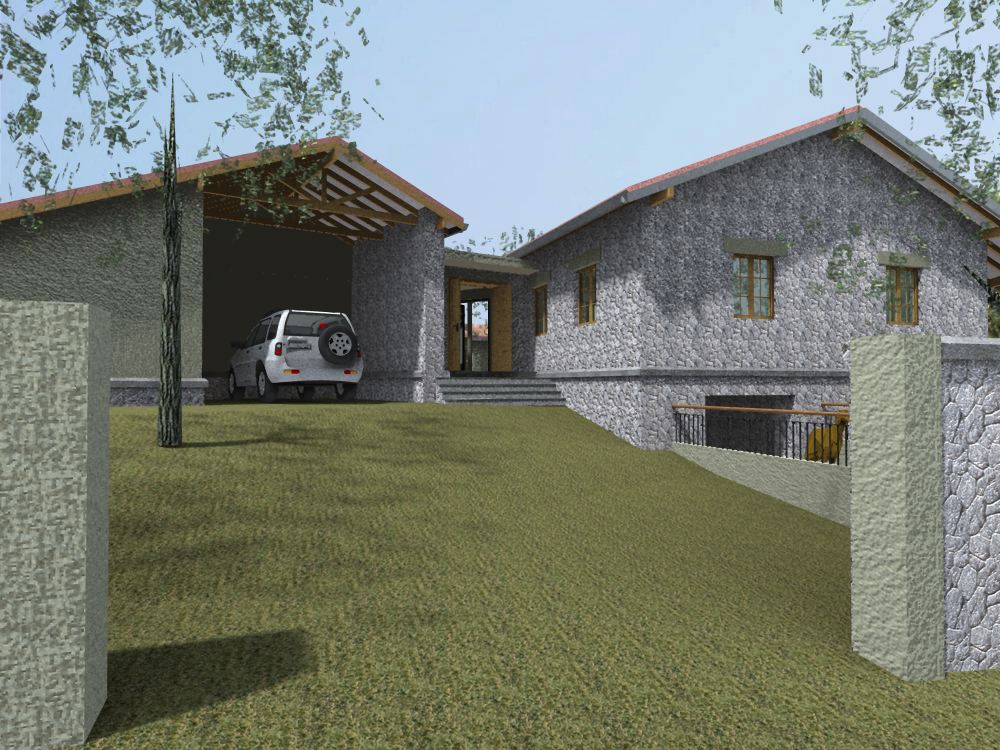
View from the gate

Picture 1 of 5

The entrance is set within a recess adjoining the car-port. Deep roof overhangs protect most walls from direct heat-gain. All external walls are at least 24" (60cm) thick and made of local stone to keep the interiors cool even in summer.

SVAGRIHA – a simplified version of the GRIHA Green Rating System

They’re calling it “Small, Versatile, Affordable” GRIHA – a less complicated green rating system for projects less than 2500 sqm. in area.   Quoting from the email they sent me:


ADaRSH (Association for Development & Research of Sustainable Habitats) is pleased to announce the launch of

SVAGRIHA
Small Versatile Affordable Green Rating for Integrated Habitat Assessment

A Rating system for small homes, offices and commercial buildings with built-up area less than 2500sqm

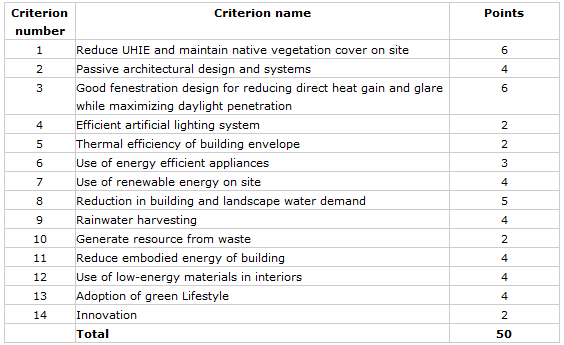
SVAGRIHA is a significantly simplified, faster, easier and more affordable rating system and will eventually function as a design-cum-rating tool. It was required that attention be paid to smaller buildings in India which although have small individual environmental footprints but their cumulative effect is far bigger. SVAGRIHA has been designed as an extension of GRIHA and has been specifically developed for projects with built-up area less than 2500sqm. SVAGRIHA can help in design and evaluation of individual residences, small offices and commercial buildings. The rating comprises of only 14 criteria (instead of 34 of GRIHA) and the interface comprises of simplified calculators. These calculators can be filled using information from construction drawings like areas and quantities of materials. This can be done easily by the architect of the project. Once completed, the tool will tell the consultant the number of points that they are able to achieve in that particular criterion and provide recommendations for any improvements in order to improve the environmental performance of the building.

Process of SVAGRIHA Rating

  • Registration of project with ADaRSH
  • Submission of completed calculators, drawings and other documents as required (quantity estimates) to ADaRSH
  • Assessment/Review as per SVAGRIHA
  • Site Visit and due diligence check post construction (mandatory)
  • Evaluation by GRIHA certified Evaluator
  • Award of Rating.

Note: The site audit to check compliance will be done once the project is complete and all equipment to be verified are installed.

For more information please visit www.grihaindia.org


GRIHA is the national green rating system for India developed by TERI and the Indian Government. I’ve always felt that GRIHA is far more suitable for us than (the more popular & better known) LEED rating system.

SVAGRIHA has just 14 criteria compared to GRIHA’s 34 and can act as a good checklist at the design stage.

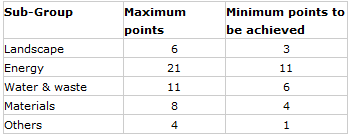
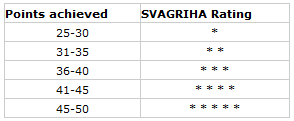
SVAGRIHA CriteriaSVAGRIHA point groupsLooking at the point groups, I’m happy to note the weight given to Energy and Water conservation. At the same time, to achieve a rating, the design must achieve minimum standards in all categories. So while they say that 25 our of 50 points will give you a one star rating, adding up all the minimums means you actually need at least 28 points.  And finally, the table below shows the star rating that can be achieved.

SVAGRIHA stars

Energy-Efficient Lighting ~ of bulbs and tubes and LEDs

The incandescent bulb is the most common – and one of the least energy-efficient lighting options for brightening a space. Today we have numerous fluorescent type fittings; both, the old tubelight as well as modern compacts which retro-fit into incandescent holders. Light Emitting Diodes – LEDs – are rapidly getting cheaper and have now reached a level of affordability. The ways of lighting an interior or exterior space are numerous. We’ll touch on a few common ones here and see how they compare.

Daylight

Apart from being free, studies have shown that natural light improves productivity and has significant health benefits compared to artificial light. Getting natural light into your home or office is not difficult to do – all it takes is a little planning by the architect at the design stage. Naturally, the designer has to take care of glare and solar heat-gain but once these factors are accounted for, there’s nothing better than sunshine to light up your life.

Unlike in Europe and North America, in peninsular India, light from the north east is the best because it is glare-free. In fact, that’s why vastu stipulates that you put your study in that very corner of your house. Conversely, the south-west is where the glare is worst so it’s better to have shade giving trees to protect you on that side. If you are living in the extreme north of our country, however, where it is really cold in winter, you’d want to open out your southern side and achieve some heat gain. For the rest of us, reflected and indirect light is the best.

The mechanics of daylighting are more complicated and will, time-willing, have a page of their own but suffice to say that every architect should try to achieve adequate lighting without building up heat inside the building.

Tube Lights

Tubelights have been around for a while and, because of the harsh light they gave off in their early days, there are numerous people who hate their very existence. But tubelights are efficient and their colour temperature has improved dramatically in recent times which makes them as comfortable to use, if not more so, than an ordinary bulb.

Tubelights have a long life and their drawback, if any, it is that they require a lot of energy to start up. So much, in fact, that it’s better to leave a tubelight on for 15 minutes than to switch it off and on again during that time.

Compact Fluorescent Lights

CFLs are the new tubelights – they have been squeezed and twisted so that they can replace ordinary bulbs. And they should! CFLs consume just 25% of the energy that a bulb does and are available in “soft white” which is easy on the eyes. Granted, they cost more but the energy saved is more than paid back during it’s life which is 10 times as long as a bulb.

LEDs

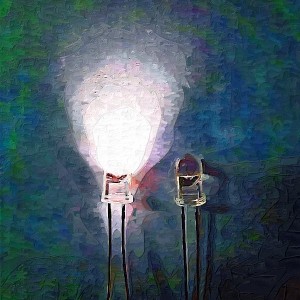
LEDs or Light Emitting Diodes are extremely energy efficient and should last for at least 10 years of continuous usage. The drawback is that LEDs are still quite expensive although rapid advances in technology and economies of scale are bringing that barrier down. An LED lamp uses, on average, about 10% of the power that an incandescent would. Add that to its longevity and we have a future winner here.

Efficiency Shootout

Here is a comparison that tells you approximately how much you benefit by installing fluorescent fittings in place of incandescent ones. LEDs have not yet reached mainstream sales so they have been excluded from the table. I am sure that in a short while, though, they’ll be leading the pack.

Cost Comparison over 10,000 hrs Usage Bulb CFL Tube
(a) Life of single bulb/tube (hrs) 1,000 10,000 2,000
(b) Number of bulbs/tubes required Nos. 10 1 5
(c) Cost of each bulb/tube (Rs.) 10 200 40
(d) Total cost of bulbs/tubes [(b) x (c)] (Rs.) 100 200 200
(e) Light Output [lumens per watt] (lm/W) 15 60 75
(f) Power requirement [equivalent to 100W bulb] (W) 100 25 20
(g) Electricity consumed (kWh) 1,000 250 200
(h) Running Cost [@ Rs. 5/kWh] (Rs.) 5,000 1,250 1,000
(i) Overall Cost [(d) + (h)] (Rs.) 5,100 1,450 1,200
(j) Saving compared to ordinary bulb (Rs.) NA 3,650 3,900

As you can see, above, the ordinary tubelight is still king. For those who don’t like the harsh light fluorescents generate, please note: they are also available at a colour temperature that closely resembles daylight.

External Links

Philips India Lighting
Osram India
Havells Lighting
GE Asia Pacific


More

If you are the manufacturer/dealer of any product that you feel is appropriate for this page, please fill this form stating clearly what exactly makes your product green/sustainable.

Please note that Greenwashing will not get you anywhere and inclusion of the product is not guaranteed and is entirely at our discretion.

Glass Curtain Walls ~ one of the stupidest things for a tropical climate

Glass façades, seen as signs of modernity & progress, are inappropriate for our climate.

Unfortunately, there is a strong trend in India these days towards designing building with glass curtain walls. These are seen as making a break from the bad old days when we were perennially short of power and couldn’t afford to run air-conditioning to keep ourselves cool. Well, I have some news for people with this view — we’re still perennially short of power and cannot afford to run so much air-conditioning.

Our country has a huge shortfall of electric power and that’s not going to change any time soon — at least not unless we suddenly manage to generate power from cold-fusion. In the meanwhile, huge quantities of fossil fuel will continue to be burned thereby exacerbating climate change and making things even worse for everybody and their pet dog.

Glass curtain-wall buildings are inappropriate for our climate for two reasons:

  1. Having a glass skin means that the inside is subjected to an enhanced greenhouse effect. Glass easily allows short wavelength light like infra-red to pass through. This radiant heat, once it has reflected off objects in the room, is of a longer wavelength which glass blocks. As a result, the internal temperature of the building builds up because the heat has now been trapped.
  2. This trapped heat has, somehow, to be expelled and – since there is never any significant natural ventilation in a glass building – this calls for massive (and environmentally expensive) air-conditioning. Let us not also forget that living and working in permanently enclosed spaces leads what is known as “sick building syndrome”.

Heat-reducing glass is like a pick-pocket returning your empty wallet.

Glass manufacturers will claim that their specialised products reduce heat build-up by 30%-40%. What they don’t tell you that not having a glass wall in the first place will reduce your heat-gain by twice that amount!

Another specious argument put forth is that using glass walls reduces the usage of electricity for lighting. Again, this is half-truth. Let us, for a moment, leave aside the amount of glare that people working inside such buildings have to put up with.

Consider a 10m² space.  Under normal circumstances, the air-conditioning load would be about 3,500W (or 2,500kW if you’re using a highly efficient HVAC system).  Lighting the same space need just 200W if you’re using incandescent, 50W for fluorescent and even less if you’re using LED fittings.

Now, if the wall even on one side is made of glass, the maximum saving from lighting that can be achieved is 200W. A lot more than this would be lost by the increase in HVAC energy requirements.  Even if expensive special glass is used, I’m afraid no amount of mathematical spin can get around this simple fact.

Energy ~ ways to reduce your energy footprint

We can easily save energy and reduce our energy consumption by taking a few simple steps. Most are not too expensive and they pay back fairly quickly.

Solar Hot Water

It’s one of the cheapest and simplest ways to save a huge amount of energy and the payback period is pretty short. The panels to be installed are basic and require very little maintenance. Essentially, the technology consists of nothing but copper pipes which zigzag behind a glass pane and heat the water that runs through them. This water is stored in an insulated tank so that if you wake up at the crack of dawn and try to have a bath, there’ll probably be some warm water for you to use. That’s if you didn’t use it up the previous night.
Continue Reading →

Passive Cooling in Tropical Climates

For centuries, until the invention of electricity, architects simply had to take into account the ways of the weather so that the interior of a home or workplace was comfortable for its tenants. In India, it led to the development of the Vastu Shastras – an ancient science that has now been obfuscated into a first class superstition… But that’s another story.
Continue Reading →

Energy-Efficient Lighting

The incandescent bulb is the most common – and one of the most wasteful – ways of lighting a space. Today we have numerous fluorescent type fittings; both, the old tubelight as well as modern compacts which retro-fit into incandescent holders. Light Emitting Diodes – LEDs are rapidly getting cheaper and have now reached a level of affordability.
Continue Reading →

Star Rated Equipment

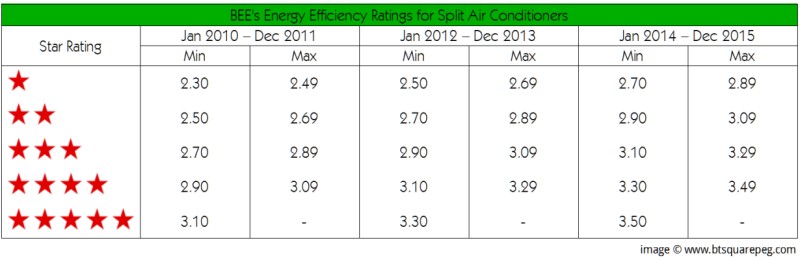
India’s Bureau of Energy Efficiency (BEE) has created a system of energy rating for a large range of appliances, equipment and light fixtures. Air-conditioners are, of course, the biggest guzzlers here and, while the initial expense is high if you choose, say, an inverter type, consistent use over time will more than offset the cost. BEE has created an interactive Energy Calculator to tell you how much you would save for different ratings of air conditioners.

Glass Façades in Tropical Climates

In our country today, glass-walled buildings are looked upon as indicative of progress and modernity and an international aesthetic. But the fallout of using such climatically inappropriate designs, is soaring energy consumption and sick-building syndrome.
Continue Reading →

Sustainability ~ living within our ecological means

What is Sustainability?

“Nature has enough for everybody’s need; not for everybody’s greed.”
- Mahatma Gandhi

Quoting Mohandas Karamchand Gandhi may no longer be fashionable but these words are more relevant today than they’ve ever been.

Every material used in construction comes, eventually, from the earth. For any architect who cares about nature, that is a predicament to be faced every day. I know it is unrealistic to halt the production or extraction of such materials but we should, at the very least, try and minimise their usage.

A simple example: small structures in India are often built with reinforced cement concrete frames when ordinary load-bearing brickwork (which is about 25% cheaper by the way) would be more than satisfactory.

Nature-friendly Architecture & Design

Nature has an enormous ability to repair herself but when we exceed her capacity to do so, this cycle of restoration and renewal is broken.

Sustainable architecture and design takes into consideration all aspects of construction that affect the environment.

There are many factors that go into making a building nature-friendly:

Using Materials Sustainably

A large chunk of a construction’s carbon footprint is determined by the materials used. For small structures, reinforced concrete (RCC) framing is environmentally expensive and thoroughly unnecessary to boot! I’ve found that load-bearing work usually does a better job.
Continue Reading →

Better Design & Construction Methods

Better design is not just about aesthetics. It holistically considers architectural design, landscape & plantation, sustainable systems & climatic conditions,. A well designed construction has minimal negative impact on the site and its surroundings.
Continue Reading →

Saving Energy

During its life cycle, a building needs an enormous amount of energy for lighting, heating & cooling. A design that makes good use of naturally occurring sunlight & prevailing breezes goes a long way in saving associated costs.
Continue Reading →

Saving Water

Economists have pointed out that future wars will be over water which makes this the most important factor in my estimation. Saving, harvesting and recycling water is far easier than it is made out to be and you often don’t need an expert to get it working.
Continue Reading →

Waste Disposal

Disposal of solid waste might not be an architect’s area of expertise but we can play a proactive role by designing for composting pits etc.
[under construction]

Impediments

If you compare apples to oranges, you will invariably draw the wrong conclusion.

The biggest deterrent to making clients accept sustainable solutions is, usually, perceived cost. That’s because they almost always compare apples with oranges. For example, if a solar heating system is installed for a project, it will naturally raise the initial cost but, if you calculate how much it saves in the medium to long term, you will find that it doesn’t make sense not to fit it. Essentially, green buildings cost less in the long term.

Even as far as basic construction is concerned, green building costs can be made lower than for typical structures. This was amply demonstrated while building Kaya Kalp where, locally available, low-tech materials and labour were used.

Energy Calculator for Air-Conditioners in India

More and more people are installing air-conditioners in their homes these days thanks in large part to the concrete hot-boxes being constructed in our cities and the heat-island effect. Added to that is the fact that many commercial buildings have senseless glass façades – which makes them even-hotter-boxes. Net result: the amount of energy being consumed in urban areas is rising at an alarming rate.  The archaically-named Bureau of Energy Efficiency or BEE has been more proactive than many other government agencies in trying to make a change in this regard.  They’ve created mandatory star ratings for refrigerators, fluorescent lamps and air-conditioners and voluntary ratings for other appliances like fans and geysers.

They’ve also created an associated site with a great energy calculator that you can use to check how much money you would save by using air-conditioners with higher star ratings.  I’ve seen similar calculators on the net that cater to the USA or Europe but it’s great to have one that is valid for us in India. It basically tells you how many rupees you would save based on your usage and on city you live in. At this time, there are 17 major Indian cities in the list and, if you can’t find your own, look for one that has a similar climate and temperature range.  You must remember that such calculators make lots of assumptions so while they should give you a fairly accurate idea, don’t expect that figures to be 100% accurate.

The site also has some basic tips on saving energy and I feel that BEE should make calculators for other appliances as well – especially light fittings and fans.

Now if only they’d remove that asinine piggy-bank mascot…

“Windancer” Windmills Have Some Great Features

With their windmills starting rotation in breeze as light as 1m/s, Wind Simplicity’s designs would be great for many parts of India that are not on the conventional wind-map. They are built to withstand snow and ice – not problems we face every day in our tropical climate!  Now if only some Indian manufacturer would tie up with them to make these in India…